An invitation to a brainstorm

Who of us would not be glad to lift the veil behind which the future lies hidden; to cast a glance at the next advances of our science and at the secrets of its development during future centuries? What particular goals will there be toward which the leading [geoscientific] spirits of coming generations will strive? What new methods and new facts in the wide and rich field of [geoscientific] thought will the new centuries disclose?

— Adapted from David Hilbert (1902). Mathematical Problems, Bulletin of the American Mathematical Society 8 (10), p 437–479. Originally appeared in in Göttinger Nachrichten, 1900, pp. 253–297.

Back at the end of October, just before the SEG Annual Meeting, I did some whining about conferences: so many amazing, creative, energetic geoscientists, doing too much listening and not enough doing. The next day, I proposed some ways to make conferences for productive — for us as scientists, and for our science itself. 

Evan and I are chairing a new kind of session at the Calgary GeoConvention this year. What does ‘new kind of session’ mean? Here’s the lowdown:

The Unsolved Problems Unsession at the 2013 GeoConvention will transform conference attendees, normally little more than spectators, into active participants and collaborators. We are gathering 60 of the brightest, sparkiest minds in exploration geoscience to debate the open questions in our field, and create new approaches to solving them. The nearly 4-hour session will look, feel, and function unlike any other session at the conference. The outcome will be a list of real problems that affect our daily work as subsurface professionals — especially those in the hard-to-reach spots between our disciplines. Come and help shed some light, room 101, Tuesday 7 May, 8:00 till 11:45.

What you can do

  • Where does your workflow stumble? Think up the most pressing unsolved problems in your workflows — especially ones that slow down collaboration between the disciplines. They might be organizational, they might be technological, they might be scientific.
  • Put 7 May in your calendar and come to our session! Better yet, bring a friend. We can accommodate about 60 people. Be one of the first to experience a new kind of session!
  • If you would like to help host the event, we're looking for 5 enthusiastic volunteers to play a slightly enlarged role, helping guide the brainstorming and capture the goodness. You know who you are. Email hello@agilegeoscience.com

Backwards and forwards reasoning

Most people, if you describe a train of events to them will tell you what the result will be. There will be few people however, that if you told them a result, would be able to evolve from their own consciousness what the steps were that led to that result. This is what I mean when I talk about reasoning backward.

— Sherlock Holmes, A Study in Scarlet, Sir Arthur Conan Doyle (1887)

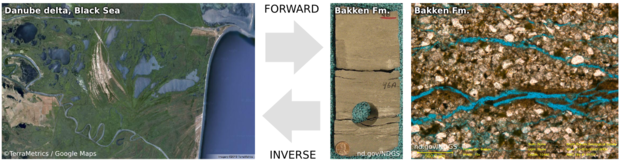
Reasoning backwards is the process of solving an inverse problem — estimating a physical system from indirect data. Straight-up reasoning, which we call the forward problem, is a kind of data collection: empiricism. It obeys a natural causality by which we relate model parameters to the data that we observe.

Modeling a measurement

Marmousi_Forward_Inverse_800px.png

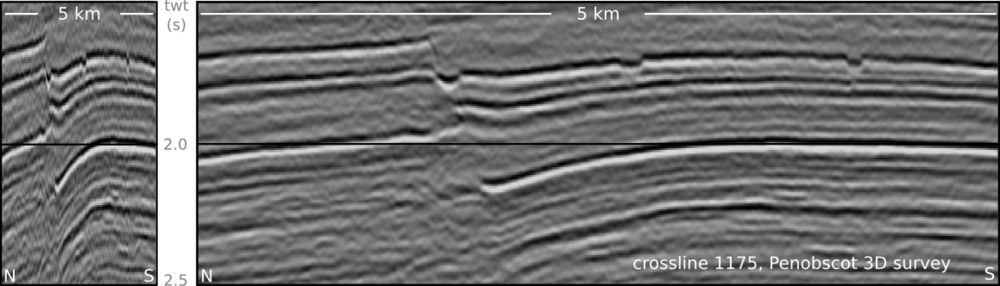
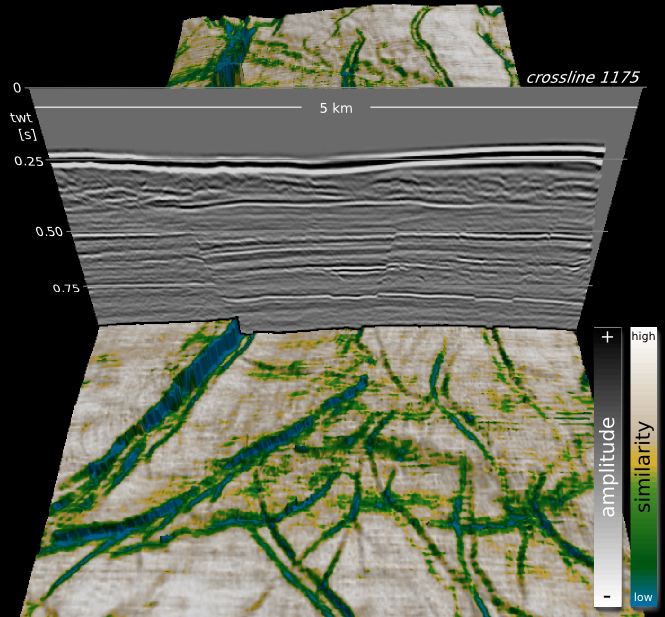
Where are you headed? Every subsurface problem can be expressed as the arrow between two or more such panels.Inverse problems exists for two reasons. We are incapable of measuring what we are actually interested in, and it is impossible to measure a subject in enough detail, and in all aspects that matter. If, for instance, I ask you to determine my weight, you will be troubled if the only tool I allow is a ruler. Even if you are incredibly accurate with your tool, at best, you can construct only an estimation of the desired quantity. This estimation of reality is what we call a model. The process of estimation is called inversion.

Measuring a model

Forward problems are ways in which we acquire information about natural phenomena. Given a model (me, say), it is easy to measure some property (my height, say) accurately and precisely. But given my height as the starting point, it is impossible to estimate the me from which it came. This is an example of an ill-posed problem. In this case, there is an infinite number of models that share my measurements, though each model is described by one exact solution. 

Solving forward problems are nessecary to determine if a model fits a set of observations. So you'd expect it to be performed as a routine compliment to interpretation; a way to validate our assumptions, and train our intuition.  

The math of reasoning

Forward and inverse problems can be cast in this seemingly simple equation.

Gm=d

where d is a vector containing N observations (the data), m is a vector of M model parameters (the model), and G is a N × M matrix operator that connects the two. The structure of G changes depending on the problem, but it is where 'the experiment' goes. Given a set of model parameters m, the forward problem is to predict the data d produced by the experiment. This is as simple as plugging values into a system of equations. The inverse problem is much more difficult: given a set of observations d, estimate the model parameters m.

Marmousi_G_Model_Data_800px_updated.png

I think interpreters should describe their work within the Gm = d framework. Doing so would safeguard against mixing up observations, which should be objective, and interpretations, which contain assumptions. Know the difference between m and d. Express it with an arrow on a diagram if you like, to make it clear which direction you are heading in.

Illustrations for this post were created using data from the Marmousi synthetic seismic data set. The blue seismic trace and its corresponding velocity profile is at location no. 250.

How to get paid big bucks

Yesterday I asked 'What is inversion?' and started looking at problems in geoscience as either forward problems or inverse problems. So what are some examples of inverse problems in geoscience? Reversing our forward problem examples:

  • Given a suite of sedimentological observations, provide the depositional environment. This is a hard problem, because different environments can produce similar-looking facies. It is ill-conditioned, because small changes in the input (e.g. the presence of glaucony, or Cylindrichnus) produces large changes in the interpretation.
  • Given a seismic trace, produce an impedance log. Without a wavelet, we cannot uniquely deduce the impedance log — there are infinitely many combinations of log and wavelet that will give rise to the same seismic trace. This is the challenge of seismic inversion. 

To solve these problems, we must use induction — a fancy name for informed guesswork. For example, we can use judgement about likely wavelets, or the expected geology, to constrain the geophysical problem and reduce the number of possibilities. This, as they say, is why we're paid the big bucks. Indeed, perhaps we can generalize: people who are paid big bucks are solving inverse problems...

  • How do we balance the budget?
  • What combination of chemicals might cure pancreatic cancer?
  • What musical score would best complement this screenplay?
  • How do I act to portray a grief-stricken war veteran who loves ballet?

What was the last inverse problem you solved?

What is inversion?

Inverse problems are at the heart of geoscience. But I only hear hardcore geophysicists talk about them. Maybe this is because they're hard problems to solve, requiring mathematical rigour and computational clout. But the language is useful, and the realization that some problems are just damn hard — unsolvable, even — is actually kind of liberating. 

Forwards first

Before worrying about inverse problems, it helps to understand what a forward problem is. A forward problem starts with plenty of inputs, and asks for a straightforward, algorithmic, computable output. For example:

  • What is 4 × 5?
  • Given a depositional environment, what sedimentological features do we expect?
  • Given an impedance log and a wavelet, compute a synthetic seismogram.

These problems are solved by deductive reasoning, and have outcomes that are no less certain than the inputs.

Can you do it backwards?

You can guess what an inverse problem looks like. Computing 4 × 5 was pretty easy, even for a geophysicist, but it's not only difficult to do it backwards, it's impossible:

20 = what × what

You can solve it easily enough, but solutions are, to use the jargon, non-unique: 2 × 10, 7.2 × 1.666..., 6.3662 × π — you get the idea. One way to deal with such under-determined systems of equations is to know about, or guess, some constraints. For example, perhaps our system — our model — only includes integers. That narrows it down to three solutions. If we also know that the integers are less than 10, there can be only one solution.

Non-uniqueness is a characteristic of ill-posed problems. Ill-posedness is a dead giveaway of an inverse problem. Proposed by Jacques Hadamard, the concept is the opposite of well-posedness, which has three criteria:

  • A solution exists.
  • The solution is unique.
  • The solution is well-conditioned, which means it doesn't change disproportionately when the input changes. 

Notice the way the example problem was presented: one equation, two unknowns. There is already a priori knowledge about the system: there are two numbers, and the operator is multiplication. In geoscience, since the earth is not a computer, we depend on such knowledge about the nature of the system — what the variables are, how they interact, etc. We are always working with a model of nature.

Tomorrow, I'll look at some specific examples of inverse problems, and Evan will continue the conversation next week.

The elements of seismic interpretation

I dislike the term seismic interpretation. There. I said it. Not the activity itself, (which I love), just the term. Why? Well, I find it's too broad to describe all of the skills and techniques of those who make prospects. Like most jargon, it paradoxically confuses more than it conveys. Instead, use one of these three terms to describe what you are actually doing. Note: these tasks may be performed in series, but not in parallel.

Visualizing

To visualize is to 'make something visible to the eye'. That definition fits pretty well in what we want to do. We want to see our data. It sounds easy, but it is routinely done poorly. We need context for our data. Being able to change the way our data looks, exploring and exaggerating different perspectives and scales, symbolizing it with perceptually pleasant colors, displaying it alongside other relevant information, and so on.

Visualizing also means using seismic attributes. Being clever enough to judge which ones might be helpful, and analytical enough to evaluate from the range of choices. Even more broadly, visualizing is something that starts with acquisition and survey planning. In fact, the sum of processes that comprise the seismic experiment is to make the unseen visible to the eye. I think there is a lot of room left for bettering our techniques of visualization. Steve Lynch is leading the way on that.

Digitizing

One definition of digitizing is along the lines of 'converting pictures or sound into numbers for processing in a computer'. In seismic interpretation, this usually means capturing and annotating lines, points, and polygons, for making maps. The seismic interpreter may spend the majority of their time picking horizons; a kind of computer-assisted drawing. Seismic digitization, however, is both guided and biased by human labor in order to delineate geologic features requiring further visualization. 

Whether you call it picking, tracking, correlating or digitizing, seismic interpretation always involves some kind of drawing. Drawing is a skill that should be celebrated and practised often. Draw, sketch, illustrate what you see, and do it often. Even if your software doesn't let you draw it the way an artist should.

Modeling

The ultimate goal of the seismic interpreter, if not all geoscientists, is to unambiguously parameterize the present-day state of the earth. There is after all, only one true geologic reality manifested along only one timeline of events.

Even though we are teased by the sparse relics that comprise the rock record, the earth's dynamic history is unknowable. So what we do as interpreters is construct models that reflect the dynamic earth arriving at its current state.

Modeling is another potentially dangerous jargon word that has been tainted by ambiguity. But in the strictest sense, modeling defines the creative act of bringing geologic context to bear on visual and digital elements. Modeling is literally the process of constructing physical parameters of the earth that agree with all available observations, both visualized and digitized. It is the cognitive equivalent of solving a mathematical inverse problem. Yes, interpreters do inversions all the time, in their heads.

Good seismic interpretation requires practising each of these three elements. But indispensable seismic interpretation is achieved only when they are masterfully woven together.

Recommended reading
Steve Lynch's series of posts on wavefield visualization at 3rd Science is a good place to begin.

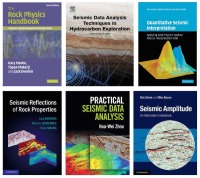
Six books about seismic interpretation

Last autumn Brian Romans asked about books on seismic interpretation. It made me realize two things: (1) there are loads of them out there, and (2) I hadn't read any of them. (I don't know what sort of light this confession casts on me as a seismic interpreter, but let's put that to one side for now.)

Here are the books I know about, in no particular order. Have I missed any? Let us know in the comments!

Introduction to Seismic Interpretation

AAPG
Amazon.com
Google Books

Bruce Hart, 2011, AAPG Discovery Series 16. Tulsa, USA: AAPG. List price USD 42.

This 'book' is a CD-based e-book, aimed at the new interpreter. Bruce is an interpreter geologist, so there's plenty of seismic stratigraphy.

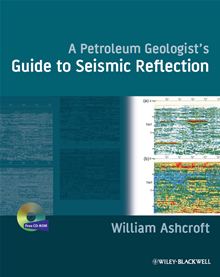
A Petroleum Geologist's Guide to Seismic Reflection

William Ashcroft, 2011. Chichester, UK: Wiley-Blackwell. List price USD 90.

I really, really like this book. It covers all the important topics and is not afraid to get quantitative — and it comes with a CD containing data and software to play with. 

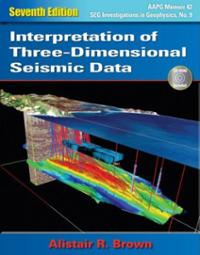
Interpretation of Three-Dimensional Seismic Data

Alistair Brown, AAPG Memoir. Tulsa, USA: AAPG. List price USD 115.

This book is big! Many people think of it as 'the' book on interpretation. The images are rather dated—the first edition was in 1986—but the advice is solid.

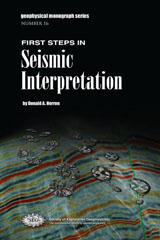
First Steps in Seismic Interpretation

SEG
Amazon.com
Google Books

Donald Herron, SEG. Tulsa, USA: SEG. List price USD 62.

This new book is tremendous, if a little pricey for its size. Don is a thoroughly geophysical interpreter with deep practical experience. A must-read for sub-salt pickers!

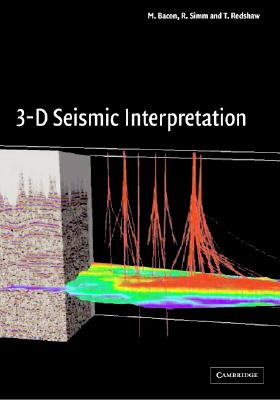
3D Seismic Interpretation

Bacon, Simm and Redshaw, 2003. Cambridge, UK: Cambridge. List price USD 80.

A nicely produced and comprehensive treatment with plenty of quantitative meat. Multi-author volumes seem a good idea for such a broad topic.

Elements of 3D Seismology

Chris Liner, 2004. Tulsa, USA: PennWell Publishing. List price USD 129.

Chris Liner's book and CD are not about seismic interpretation, but would make a good companion to any of the more geologically inclined books here. Fairly hardcore.

The rest and the next

Out-of-print and old books, or ones that are less particularly about seismic interpretation:

An exciting new addition will be the forthcoming book from Wiley by Duncan Irving, Richard Davies, Mads Huuse, Chris Jackson, Simon Stewart and Ralph Daber — Seismic Interpretation: A Practical Approach. Look out for that one in 2014.

Watch out for our book reviews on all these books in the coming weeks and months.

The HUB on the South Shore

One of the things we dream about is a vibrant start-up community in the energy sector. A sort of Silicon Valley, but in the Bow Valley, or the Woodlands, or wherever. And focused on the hard, important problems in our field. More young people bringing their ideas, energy and talent — and more experienced people taking a chance, investing, and mentoring. Wresting more of the innovation opportunity back from big E&P and service companies, and freeing the professionals trapped in them.

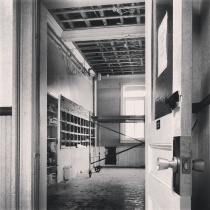
We also want to see some of this in Nova Scotia. Indeed, the future of the Nova Scotian economy depends on it. So Agile has invested in a new community catalyst on the South Shore, the region where I live. Along with two others, I have renovated an old school room (left) and started The HUB South Shore — a place where freelancers, entrepreneurs, and professionals can come to work, network, not work, and learn. Affiliated with the HUB Halifax that Evan frequents, it's part of a global coworking movement, and a far-reaching network of HUBs.

Most importantly, it's a place to be around other highly productive, creative individuals — all of whom have made bold choices in their careers. Their proximity gives us all greater courage.  

There are similar spaces in Calgary, Houston, Aberdeen, and Perth. They completely transform the experience of working alone, or in small groups like Agile. Instead of isolation, you gain instant access to other self-starters, potential colleagues, and new friends. Many of these spaces are de facto incubators, with ready access to tools, people, and even financial backing. They are places where things happen — without IT, HR, or Legal. Imagine!

If you're thinking about starting out on your own, or with a friend or three, look around for a co-working space. It might make the transition from employee to freelancer (or even employer) a little less daunting. 

And if you find yourself on the South Shore of Nova Scotia, come to the HUB and say hello!

The calculus of geology

Calculus is the tool for studying things that change. Even so, in the midst of the dynamic and heterogeneous earth, calculus is an under-practised and, around the water-cooler at least, under-celebrated workhorse. Maybe that's because people don't realize it's all around us. Let's change that. 

Derivatives of duration

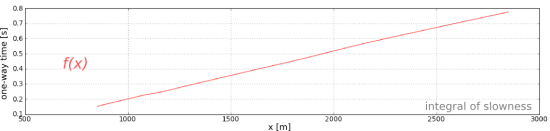
We can plot the time f(x) that passes as a seismic wave travels though space x. This function is known to many geophysicists as the time-to-depth function. It is key for converting borehole measurements, effectively recorded using a measuring tape, to seismic measurements, recorded using a stop watch.

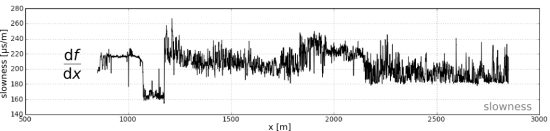
Now let's take the derivative of f(x) with repsect to x. The result is the slowness function (the reciprocal of interval velocity):

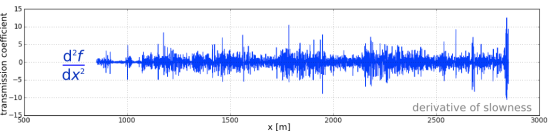
The time duration that a seismic wave travels over a small interval (one metre). This function is an actual sonic well log. Differentiating once again yields this curious spiky function:

Geophysicists will spot that this resembles a reflection coefficient series, which governs seismic amplitudes. This is actually a transmission coefficient function, but that small detail is beside the point. In this example, the creating a synthetic seismogram mimics the calculus of geology. 

If you are familiar with the integrated trace attribute, you will recognize that it is an attempt to compute geology by integrating reflectivity spikes. The only issue in this case, and it is a major issue, is that the seismic trace is bandlimited. It does not contain all the information about the earth's slowness. So the earth's geology remains elusive and blurry.

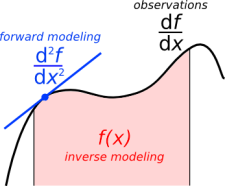
The derivative of slowness yields the reflection boundaries, the integral of slowness yields their position. So in geophysics speak, I wonder, is forward modeling akin to differentiation, and inverse modeling akin to integration? I find it fascinating that these three functions have essentially the same density of information, yet they look increasingly complicated when we take derivatives. 

What other functions do you come across that might benefit from the calculus treatment?

The sonic log used in this example is from the O-32-B/11-E-64 well onshore Nova Scotia, which is publically available but not easily accessible online.

Creeping inefficiency

Dear CIO of a major oil and gas company,

Search—something you take for granted on the Internet—is broken in your company. Ask anyone.

You don't notice, because you don't count the cost of lost seconds or minutes finding things. And you can't count the cost of the missed opportunities because someone gave up looking. This happens thousands of times a day, by the way. 

Here's what people do when they want to find something on your intranet: 

  1. Ask people if they know where it is. (Nobody does.)
  2. Give up.

The good news is that there is a relatively easy way to fix this immediately and forever. Here's how:

  1. Buy Google Search Appliance.

If you don't already have one of these in your server room, then your luck is in. Soon everyone will think you're a hero. At least, they will until they realize there are 31 versions of every file in your organization. At least you'll know where they all are though, right?

You're welcome,
Matt

Review: The Wave Watcher's Companion

Visit Amazon.com

The Wave Watcher's Companion: From Ocean Waves to Light Waves via Shock Waves, Stadium Waves, and All the Rest of Life's Undulations
Gavin Pretor-Pinney, Perigee (USA), Bloomsbury (UK), July 2010, $22.95

This book was on my reading list, and then on my shelf, for ages. Now I wish I'd snapped it up and read it immediately. In my defence, the end of 2010 was a busy time for me, what with turning my career upside down and everything, but I'm sure there's a lesson there somewhere...

If you think of yourself as a geophysicist, stop reading this review and buy this book immediately. 

OK, now they've gone, we can look more closely. Gavin Pretor-Pinney is the chap behind The Cloud Appreciation Society, the author of The Cloudspotter's Guide, and co-creator of The Idler Magazine. He not a scientist, but a witty writer with a high curiosity index. The book reads like an extended blog post, or a chat in the pub. A really geeky chat. 

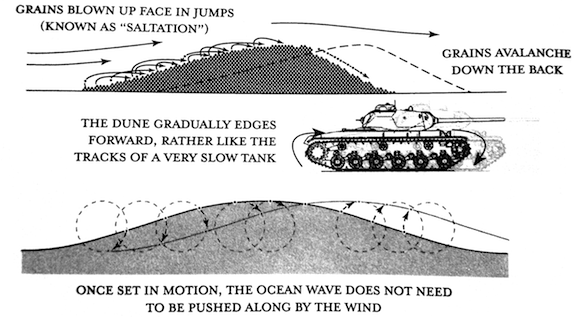
Geophysicists are naturally drawn to all things wavy, but the book touches on sedimentology too — from dunes to tsunamis to seiches. Indeed, the author prods at some interesting questions about what exactly waves are, and whether bedforms like dunes (right) qualify as waves or not. According to Andreas Baas, "it all depends on how loose is your definition of a wave." Pretor-Pinney likes to connect all possible dots, so he settles for a loose definition, backing it up with comparisons to tanks and traffic jams. 

The most eye-opening part for me was Chapter 6, The Fifth Wave, about shock waves. I never knew that there's a whole class of waves that don't obey the normal rules of wave motion: they don't obey the speed limits, they don't reflect or refract properly, and they can't even be bothered to interfere like normal (that is, linear) waves. Just one of those moments when you realize that everything you think you know is actually a gross simplification. I love those moments.

The book is a little light on explanation. Quite a few of the more interesting parts end a little abruptly with something like, "weird, huh?". But there are plenty of notes for keeners to follow up on, and the upside is the jaunty pace and adventurous mix of examples. This one goes on my 're-read some day' shelf. (I don't re-read books, but it's the thought that counts).

Figure excerpt from Pretor-Pinney's book, copyright of the author and Penguin Publishing USA. Considered fair use.